.jpg)

Who we are
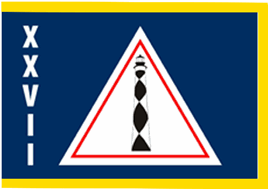
America’s Boating Club - District 27 of North Carolina and the Catawba River, South Carolina is a unit ofAmerica's Boating Club® | United States Power Squadrons®
which promotes boating safety through education and on-the-water skills training, fun social activities for the whole family, and community service.District 27 comprises 12 squadrons in North Carolina and one squadron in South Carolina and is one of 28 districts within America's Boating Club | United States Power Squadrons. We offer opportunities for educational enrichment to make boating more accessible, safer and much more enjoyable. Our volunteer members partner with our communities to support local maritime events, assist with environmental stewardship and assist with humanitarian outreach. There is ample time for a variety of engaging and fun boating activities year-round such as raft-ups, local cruises, picnics, tours and general good times sharing a meal.
Our educational activities are available in classroom, live-streamed and online formats. We offer seminars, classes and courses covering every aspect of seamanship, navigation, boat handling, cruise planning and boat ownership. For more information about boating education, please visit americasboatingclub.org/learn.
Our members are boating families who contribute to their communities by promoting safe boating through education. We enjoy spending time with our fellow boaters on the water and in the classroom. United States Power Squadrons is America's largest non-profit boating organization and has been honored by three US presidents for its civic contributions. Information about joining us can be found at americasboatingclub.org/join.
District 27 provides experienced leadership to assist the leaders in individual clubs/squadrons to maximize their effectiveness. District leaders conduct a variety of informative training sessions to better inform members about new processes and features of the national headquarters. These activities include new officers training, educational and administrative changes, new curriculum development and the conduct of district meetings.
Supporting the local boating community across our service area, District 27 coordinates a Vessel Safety Check (VSC) Program, in cooperation with the US Coast Guard Auxiliary. This is a free vessel equipment check performed at your boat by a certified Vessel Examiner. This check usually takes 30 to 45 minutes, depending upon the size of your boat. Our examiners will assist boaters with correcting their safety gear to meet the current safety requirements. Boats that pass the examination are awarded a distinctive VSC Decal that alerts the Coast Guard, Harbor Patrol, and other law-enforcement agencies that your boat was found to be in full compliance with all federal and state boating laws.
Boater Skills Training.
One of the three focus areas of District 27 is boating safety. We typically utilize On-The-Water training to promote and develop the skills necessary for safe and fun boat operation. We offer training through our NASBLA-approved America’s Boating Course, the Boat Handling Course, the Partner in Command seminar and several on-the-water navigation courses. We encourage the wearing of life jackets and PFD while on the water.Boating Area
The service area of District 27 covers all of North Carolina from the "Outer Banks" and "Inner Banks", inshore to the Piedmont lakes and south to the Catawba River in South Carolina’s Chester, Lancaster and York counties. Our local clubs operate in and adjacent to the North Carolina communities of Cape Lookout, Cape Fear, Greenville, Washington, Oriental, New Bern, Morehead City, Beaufort, Atlantic Beach, Emerald Isle, Winston Salem, Charlotte, Fayetteville, Raleigh, Shallotte, Wrightsville Beach, Wilmington and Southport.True Fact: Power Squadron Spit is part of the National Park Service’s Cape Lookout National Seashore and appears on nautical charts produced and distributed by the National Oceanic and Atmospheric Administration (NOAA). In 1971, NOAA’s National Ocean Service and the United States Board on Geographic Names officially designated this strand of seashore on Cape Lookout (2.5 miles north-northwest of the cape point near 34.6176N, 76.5524W) as "Power Squadron Spit" to recognize the Cooperative Charting efforts of District 27 squadrons in North and South Carolinas.
Social Activities
Members enjoy socializing. Many of the District 27 clubs/squadrons enjoy the fellowship and camaraderie of monthly gatherings to share recent cruise accomplishments, future plans and new sea stories. They typically plan a year’s worth of activity in early spring and enjoy the fulfillment of boating together throughout the season. Some squadrons meet together from time to time for shared outings. Visiting members are always welcomed and treated as family.Activities range from restaurant lunches, a day cruise, anchoring out and overnight raft-ups. Multi-day and week-long coastal cruises are undertaken by several clubs. Some clubs organize charter cruises to international destinations. All activities provide an opportunity for relaxation, fun, exploration and enrichment.
Our Early Beginnings
Before 1900, most recreational boats were sail-powered; everything relating to recreational boating was geared to sailing. There were a few steam-powered boats, but they required large crews. Shortly after the turn of the century, gasoline-powered craft became available and many boaters bought them; power boating became a popular activity. Since skills and education were all directed to sailing at that time, power boaters found themselves in a skill and knowledge gap.In 1912, Roger Upton decided to fill that gap by forming an unofficial Power Boat Division of the Boston Yacht Club. A year later, that division became “The Power Squadrons” and received considerable media attention. Interest began to spread. In 1913, over 70 power-boat clubs and owners' associations met at the New York Yacht Club. At the second meeting of this group, United States Power Squadrons (USPS) was officially formed.
In April, 1917, Charles F. Chapman sent a letter to the Navy Department offering the services of USPS' instructional programs to train men for the Naval Coastal Defense. Franklin Delano Roosevelt, the then Assistant Secretary of the Navy, formally accepted the offer. Over 5,000 students attended these classes and entered the military. As a result of their USPS training, many earned commissions in the U. S. Navy. During both World War I and World War II, USPS supported the war efforts by training many naval navigators. Thus, from the club-within-a-club beginnings of USPS at the start of the twentieth century, there evolved the largest private, fraternal, self-supporting, nonprofit, non-governmental and non-military organization of power and sail boaters in the world.
Over the years, USPS has expanded throughout the United States and the Caribbean. Now, a member is one of approximately 14,000 members in 270 squadrons. We work, study and play with members of our neighboring squadrons. Several squadrons in North Carolina and nearby have joined together into “District 27”, one of 28 geographically-related districts in USPS. Our educational courses have been continuously developed, improved and expanded since USPS' early days so they remain current. Each of those courses is available when and where one chooses —with members of one's own squadron, members of other squadrons, or independently.
In 2017 USPS adopted a modern re-branding as “America’s Boating Club®” Some squadrons also re-brand themselves as a “club” rather than their historical “squadron” designation.
Prepared by
Stf/C Richard LaPalme, SN
2/22/2026
Stf/C Richard LaPalme, SN
2/22/2026